
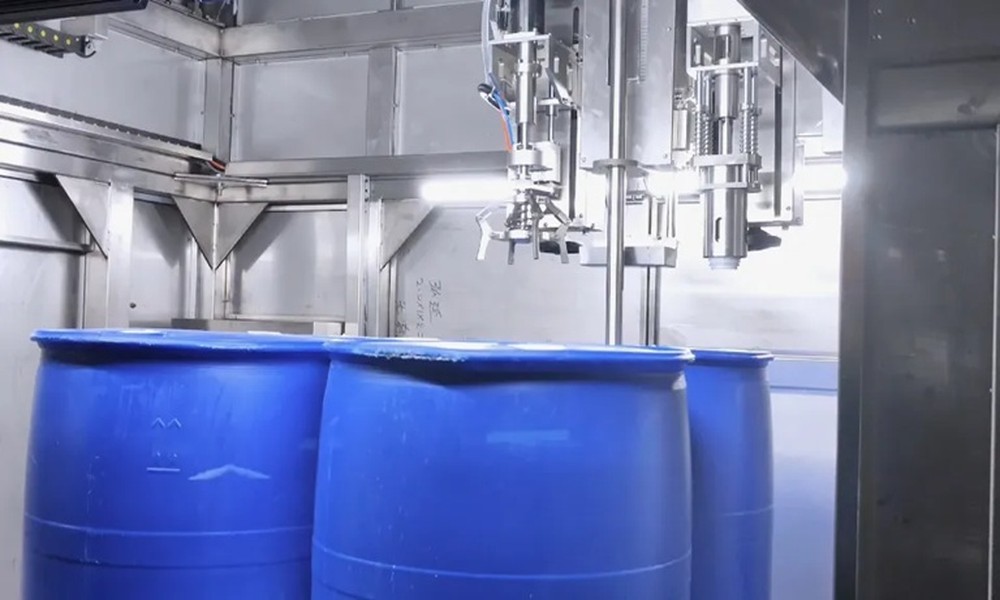
Drum filling has been a core process in chemical and petrochemical manufacturing for decades, but the way it is done today bears little resemblance to the manual operations of the past. Smart drum filling systems, equipped with precision sensors, automated controls, and integrated safety features, are transforming how manufacturers handle everything from small 5-litre containers to standard 200-litre drums. The gains in accuracy, speed, and safety are not incremental. They are substantial enough to reshape the economics of an entire filling operation.
In Singapore’s chemical manufacturing corridor, where space is constrained, regulations are strict, and labour costs continue to rise, the shift towards intelligent filling systems is accelerating. Manufacturers who once relied on semi-automatic or manual filling are discovering that smart systems pay for themselves faster than expected.
What Makes a Drum Filling System “Smart”
The term “smart” in this context refers to systems that integrate measurement, control, and monitoring functions into a single automated platform.
Precision metering.
Smart systems use mass flow meters or load cells to measure fill volume by weight, achieving accuracy levels within fractions of a percent. This eliminates the overfilling and underfilling that plague manual and semi-automatic systems.
Automated valve control.
Fill valves open and close automatically based on real-time weight data. The system slows the flow rate as the target weight approaches, topping off precisely without overshooting.
Recipe management.
Operators can store and recall fill recipes for different products and container sizes. Switching from a 20-litre pail of solvent to a 200-litre drum of lubricant requires selecting a recipe, not re-programming the machine.
Data logging.
Every fill is recorded with timestamp, batch number, fill weight, and operator identification. This data supports quality control, regulatory compliance, and production analysis.
Safety interlocks.
The system monitors for abnormal conditions, such as overpressure, spills, and container absence, and halts operation automatically to prevent accidents.
The Problem with Manual and Semi-Automatic Filling
Manual drum filling relies on operators to control the fill process visually or by monitoring a scale. This approach has several inherent weaknesses.
Accuracy variation.
Human operators cannot consistently achieve the same fill accuracy as an automated system. Overfills waste product. Underfills create compliance risk.
Speed limitations.
An operator managing a fill manually cannot match the cycle time of an automated system, especially when filling large drums that require several minutes per fill.
Safety exposure.
Chemical and petrochemical products are often hazardous. Manual filling places operators in close proximity to open containers of volatile, corrosive, or toxic substances.
Fatigue.
Over a full shift, operator attention and accuracy decline. The last fills of the day are less precise than the first.
Semi-automatic systems address some of these issues but still require significant operator involvement in setup, monitoring, and changeover.
As Lee Kuan Yew once said, “If we can think of new ways of doing things, we will find that we can do more with less.” Smart drum filling systems are the embodiment of this principle in manufacturing.
Benefits Across the Container Range
One of the most significant advantages of modern smart filling systems is their ability to handle a wide range of container sizes on a single platform.
5 to 25-litre containers.
Pails, jerry cans, and small drums used for retail and distribution. Smart systems fill these quickly and accurately using inline filling stations with automatic container detection.
25 to 60-litre drums.
Mid-range containers common in industrial distribution. Automated filling reduces the manual handling burden and maintains consistency across high volumes.
200-litre drums.
The standard large container for bulk chemical and petrochemical products. Smart drum and IBC filling systems handle these with precision metering and automated bung or cap insertion.
IBC containers (1,000 litres).
Intermediate bulk containers require high-flow filling with precise cutoff. Smart systems manage the high volumes while maintaining accuracy.
The ability to switch between container sizes without extensive retooling or recalibration maximises line utilisation and reduces changeover downtime.
Safety and Compliance
Chemical and petrochemical filling operations are subject to stringent safety and environmental regulations in Singapore. Smart filling systems support compliance in several ways.
- Spill prevention. Automated valve control and overflow sensors minimise the risk of product spills during filling.
- Fume management. Enclosed filling stations with integrated extraction systems reduce operator exposure to volatile fumes.
- Traceability. Complete fill records for every container support batch traceability and product recall procedures.
- Hazardous area ratings. Equipment designed for use in hazardous atmospheres meets ATEX or IECEx standards, ensuring safe operation in environments with flammable vapours.
Return on Investment
The financial case for smart drum filling equipment is built on four pillars.
- Reduced product waste. Precision filling eliminates the one to three percent overfill that manual systems typically produce. On high-volume lines filling expensive chemical products, this saving alone can justify the investment within months.
- Increased throughput. Faster cycle times and reduced changeover periods produce more filled containers per shift.
- Lower labour costs. Automated systems require fewer operators per line, freeing labour for higher-value tasks.
- Fewer compliance incidents. Accurate fills and complete documentation reduce the risk of regulatory fines, product recalls, and customer complaints.
Making the Transition
Manufacturers transitioning from manual or semi-automatic filling to a smart system should begin with a thorough assessment of their current operation. Identify the products, container sizes, and throughput targets. Evaluate the existing infrastructure for power, compressed air, and data connectivity. Then engage a packaging equipment specialist who can design a system tailored to those specific requirements.
The shift from manual to smart drum filling is not a marginal improvement. It is a step change in capability that transforms accuracy, safety, and efficiency simultaneously. For chemical and petrochemical operations in Singapore and the region, it is fast becoming the standard rather than the exception.

Comments are closed.